Curious by nature. Product by design.
.experience
10 years
.product
2 years dedicated
.location
Surrey
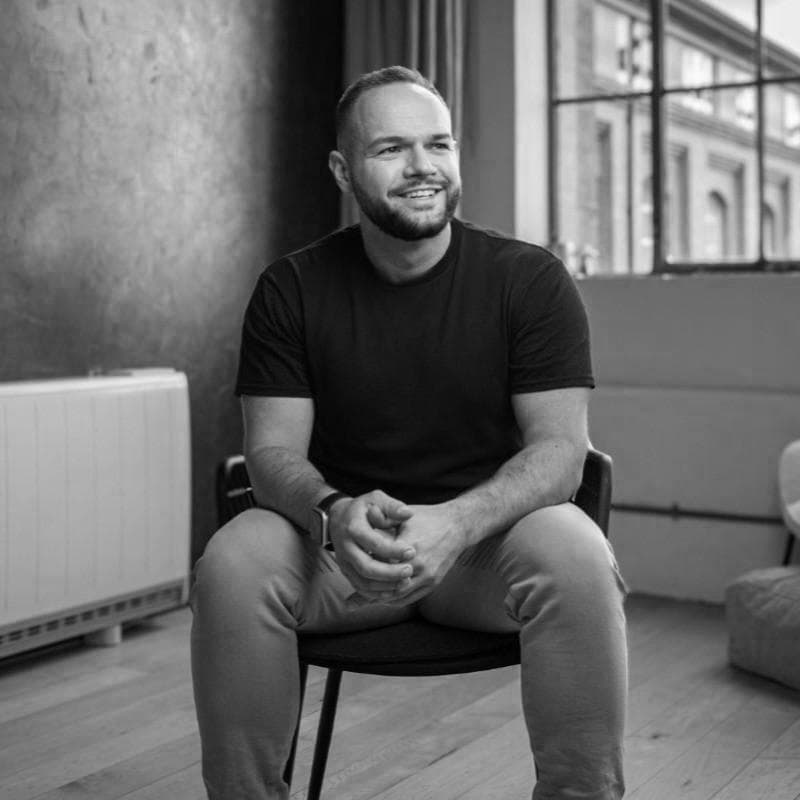
Hi, I'm George. I've spent the last decade building software for an industry I used to work in — and that shapes everything about how I approach product. Not because I already know the answers, but because I know the questions that matter and the pressure people are under when they're trying to answer them.
.story
I didn't set out to be a product manager. I set out to understand things properly.
My career started in payroll customer service — answering phones, working through problems with recruitment agencies and their teams. I didn't fully understand the industry when I joined, but I was too curious to stay comfortable with that for long. I kept asking questions until things made sense, and eventually that curiosity pulled me from the phones into actually processing payroll, and then into an outsourcing business running back-office operations for recruitment agencies.
That's where product first showed up, though I wouldn't have called it that at the time. The business decided to build its own software — nothing in the market did everything they needed — and I ended up involved almost by accident. What I noticed was that my colleagues were hitting the same walls every single week, rebuilding the same Excel workarounds every Monday like it was just part of the job. So I started building macros to do the heavy lifting for them. It seemed obvious. It turned out that instinct — if something's being repeated, it can be improved — is basically the foundation of how I think about product.
My career has taken some unexpected turns. For several years I worked part-time as cabin crew for an airline, alongside consulting for a start-up payroll business. Solving problems for ten hours and then relaxing on a beach for two days seemed like a reasonable arrangement at the time. What surprised me, though, was how much of what I'd learned in operations translated directly into thinking about customer experience. I was mapping customer journeys at 30,000 feet before I knew the phrase existed — thinking about everything a passenger had already been through before they even reached their seat. An argument about packing. Traffic stress. Parking chaos. Security queues. Forgetting to take their belt off. By the time someone sits down on an aircraft, they've often had a genuinely terrible morning, and you're stuck in a metal tube with them and limited tools to make it better. I was always wondering: what if the crew had better data? What if we knew it was this person's tenth flight with us, that their screen had broken last time, that they like Maltesers? The instinct to connect data to better human experiences — that was already there, long before I had a job title for it.
Coming back to payroll and product full-time felt like everything clicking into place. I'd spent years inside complex, pressured operational environments. That's the empathy I bring to product — not from research reports, but from having actually been in those situations.
The thing I'm most proud of professionally isn't a feature. It's what we built at Finity. I joined a business that was genuinely engineering-led — ideas went straight from someone's head to a developer's ticket, with no discovery process, no success metrics, nothing in between. I built that infrastructure from scratch. Prioritisation frameworks, beta processes, success metrics, refinement scoring, customer research programmes. Changing how a business thinks about building product is slower and messier than shipping a feature, and it matters more.
.how i work
I'm not a product manager who stays in my lane with tunnel-vision.
I work directly alongside designers on research. I collaborate with marketing on campaigns and content. I personally manage relationships with our most important customers — not as an escalation route, but as a deliberate choice, because staying close to the people you're building for isn't optional if you want to build the right things. I write thought leadership, deliver sales demos, and build knowledge bases for teams who need to understand the domain they're working in.
My colleagues would tell you I'm fair, available, and that I explain things properly the first time. I'm visual by nature — I reach for a Miro board before a document (sometimes what's in my head is more alarming to look at than I'd hoped). I have a decent sense of humour, and I think work should have some joy in it.
I hold the business problem and the user problem at the same time. The best product decisions happen when you refuse to treat them as separate conversations.
.work experience
Oct 2024 — Present
Finity
Product Lead
Transformed an engineering-led business into a product-led one — building discovery frameworks, success metrics, and customer research programmes from scratch while shipping compliance tools, onboarding products, and platform integrations for 150K+ workers monthly.
Dec 2023 — Sep 2024
Advancia
Product Development Consultant
Took an earned wage access platform from pre-deployment UAT to App Store and Google Play launch, managing outsourced development teams and redesigning the product roadmap through focus group validation.
Jul 2019 — Dec 2023
Omnia Outsourcing
Operations Manager
Led technology strategy, cloud migration, and software implementation across a payroll outsourcing business. Designed performance dashboards that improved customer service response rates from 20% to 88% within 90 seconds.
2017 — 2023 (part-time)
Undisclosed airline
Cabin Crew
Worked part-time alongside payroll consultancy. Always thinking about customer journeys, data, and what better tools could do for both crew and passengers.
Dec 2013 — Jan 2017
EdenGroup
Product Support & Development
First exposure to product — gathering requirements, conducting UAT, implementing the EverTime Pay & Bill platform for clients, and acting as the bridge between customers and developers.
.stack
Product & Delivery
JiraConfluenceJira Product DiscoveryMiroFigmaBasecampLinear
Research & Analytics
HotjarIntercomHubSpot
Prototyping & Building
Claude CodeClaude DesignZapierGitHubVercel
Collaboration
NotionAtlassian SuiteSlackMS Office 365
.a few things that might surprise you
.cabin crew
For several years I worked as airline cabin crew alongside my payroll consultancy work. Ten hours solving problems, two days on a beach — seemed like a fair trade. I was always thinking about what the crew could do better with the right data.
.furloughed and qualified
During Covid, the airline went quiet. Furlough gave me time I didn't know what to do with. Through a genuine passion for movement and fitness, I qualified as a gym instructor — and spent lockdown delivering online classes and outdoor bootcamps to keep myself and others moving. It turns out helping people show up and push themselves is its own kind of product problem.
.self-builder
I build my own applications in Claude Code — some for personal use, some with a more entrepreneurial angle. If I can write down a process end-to-end, I want to automate it or build something better.
.school of hard knocks
I've volunteered with the School of Hard Knocks charity, supporting young people through physical activity and wellbeing. Genuinely one of the most rewarding things I've done outside of work.
.top 1% miro user (2025)
According to Miro themselves. I have no strong feelings about this.
.personal
Outside of work you'll usually find me training — running, cycling, or in the pool working towards the next triathlon. I cook obsessively (averagely), particularly things I've picked up while travelling. Surrey is home, but new cities and new cultures are what I travel for.